Didi is the easy way to get a taxi in China
In China I usually use Didi Travel inside Alipay. WeChat and Alipay contain many mini programs, so you do not necessarily need a separate taxi app. If you prefer, you can also install Didi as its own app.
In practical terms, Didi is broadly comparable to Uber: you enter your pickup point, enter your destination, choose a vehicle type, track the driver on the map and pay automatically at the end. For foreign travellers, this is extremely useful because you do not have to explain the whole route to the driver in Chinese.
The key trick: use Chinese place names
Searching in English often works well, and sometimes even German input works too, but not always. When it does not, I copy the Chinese name of the hotel, station or attraction directly into Didi. For places such as Great Wall sections, parks and temples, this is usually much safer.
Before ordering the ride, I check the map pin. The pickup point is usually suggested automatically. For the destination, I prefer to check once too often rather than end up at the wrong entrance.
What Didi looks like in real use
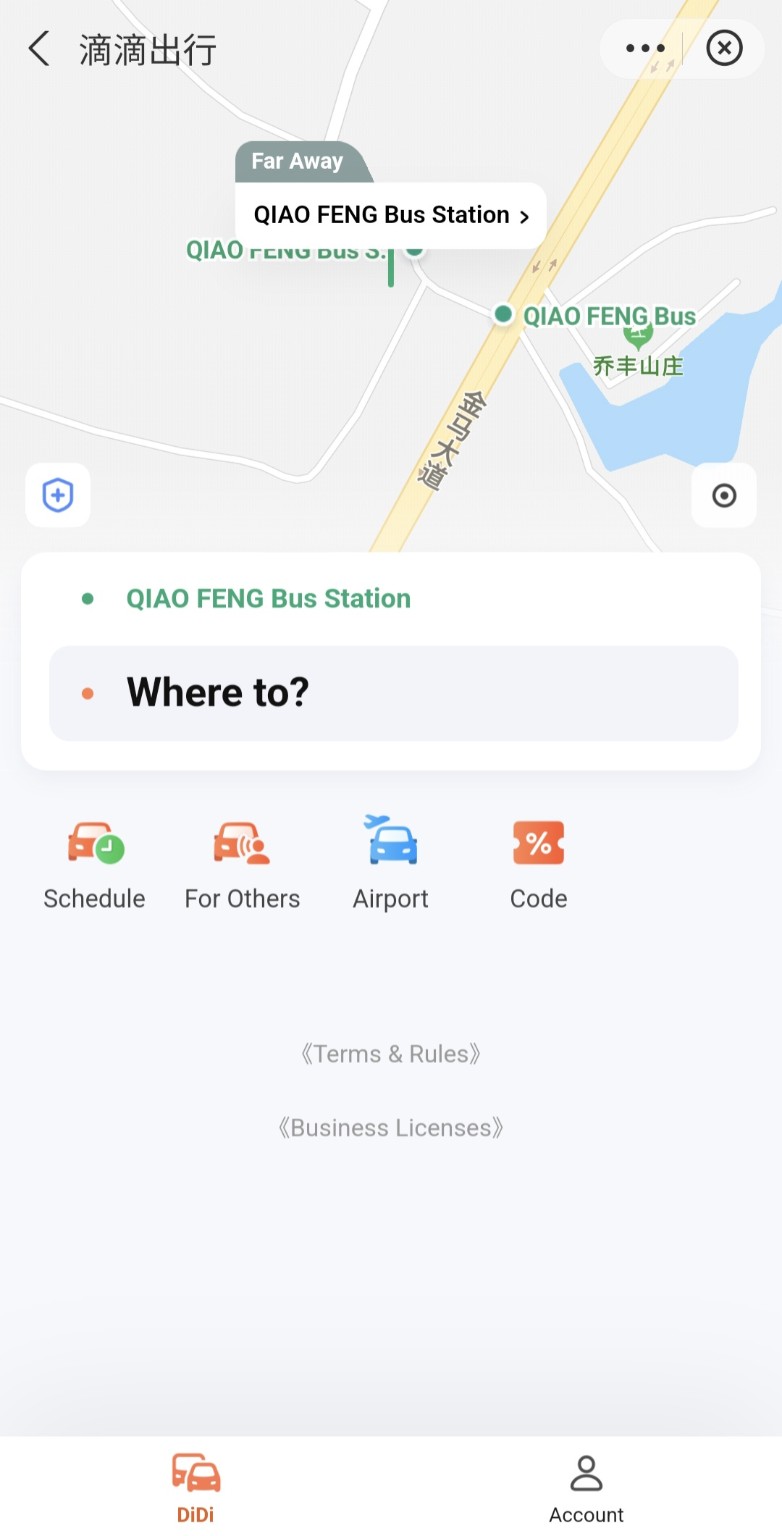
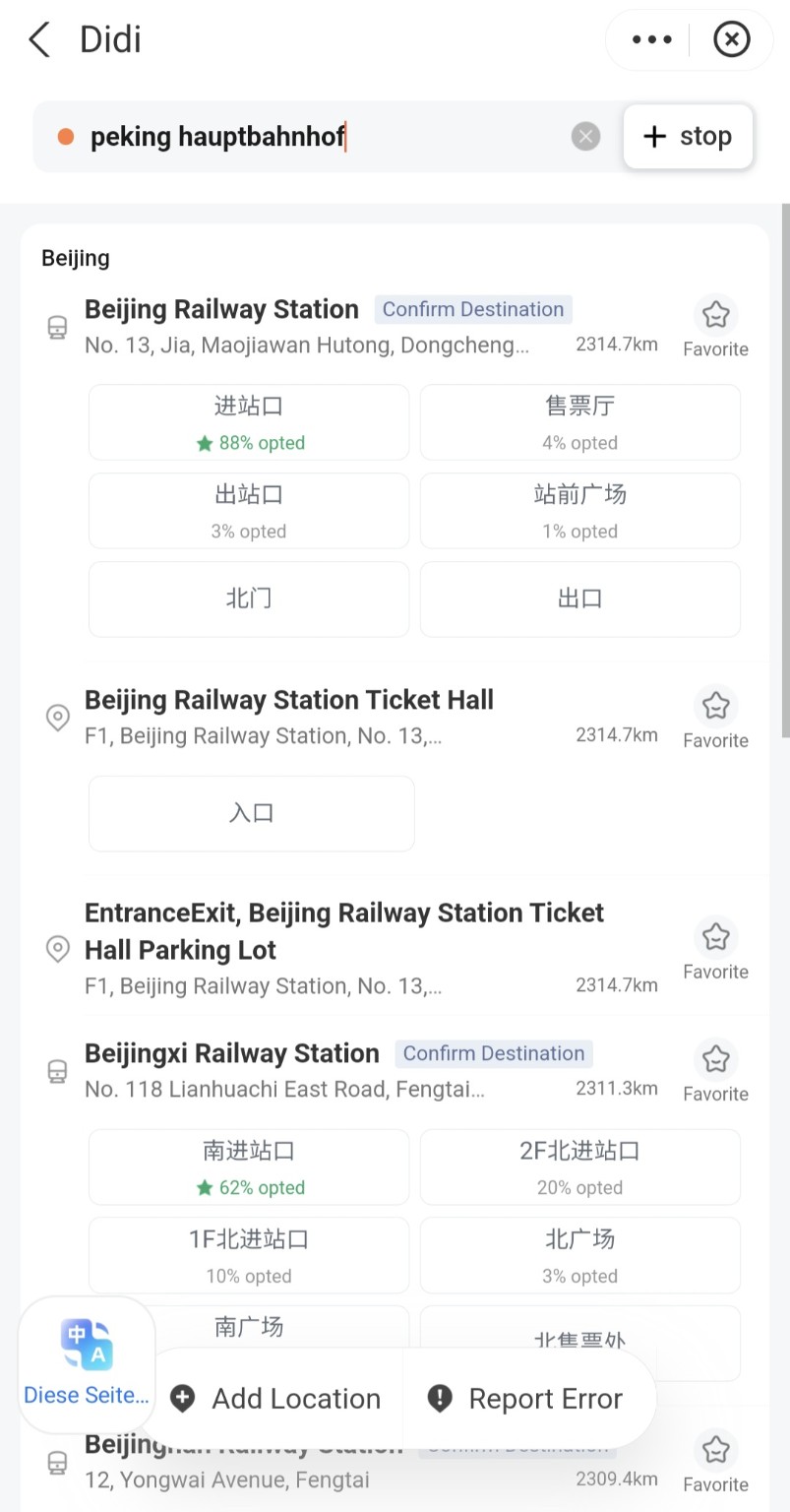
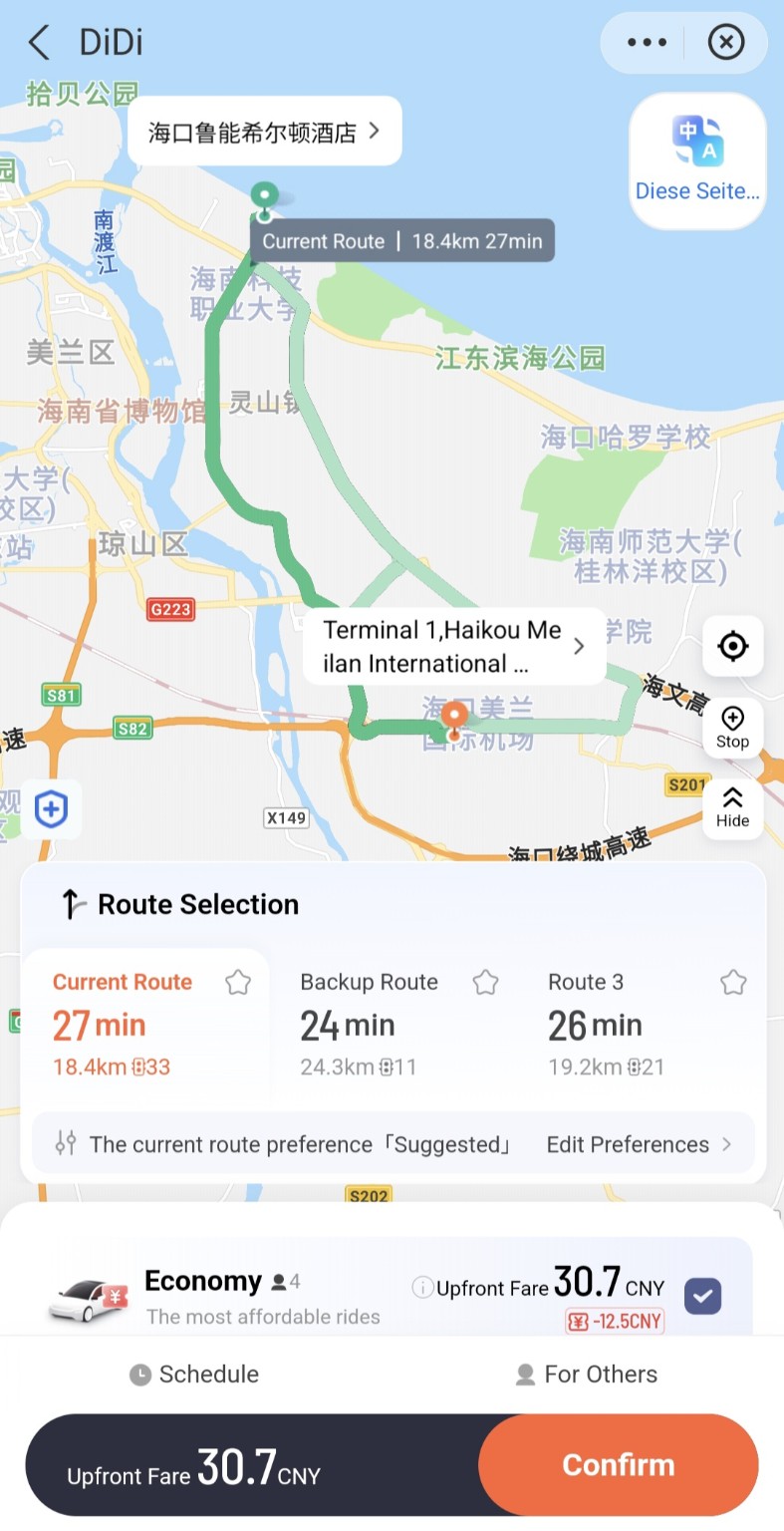
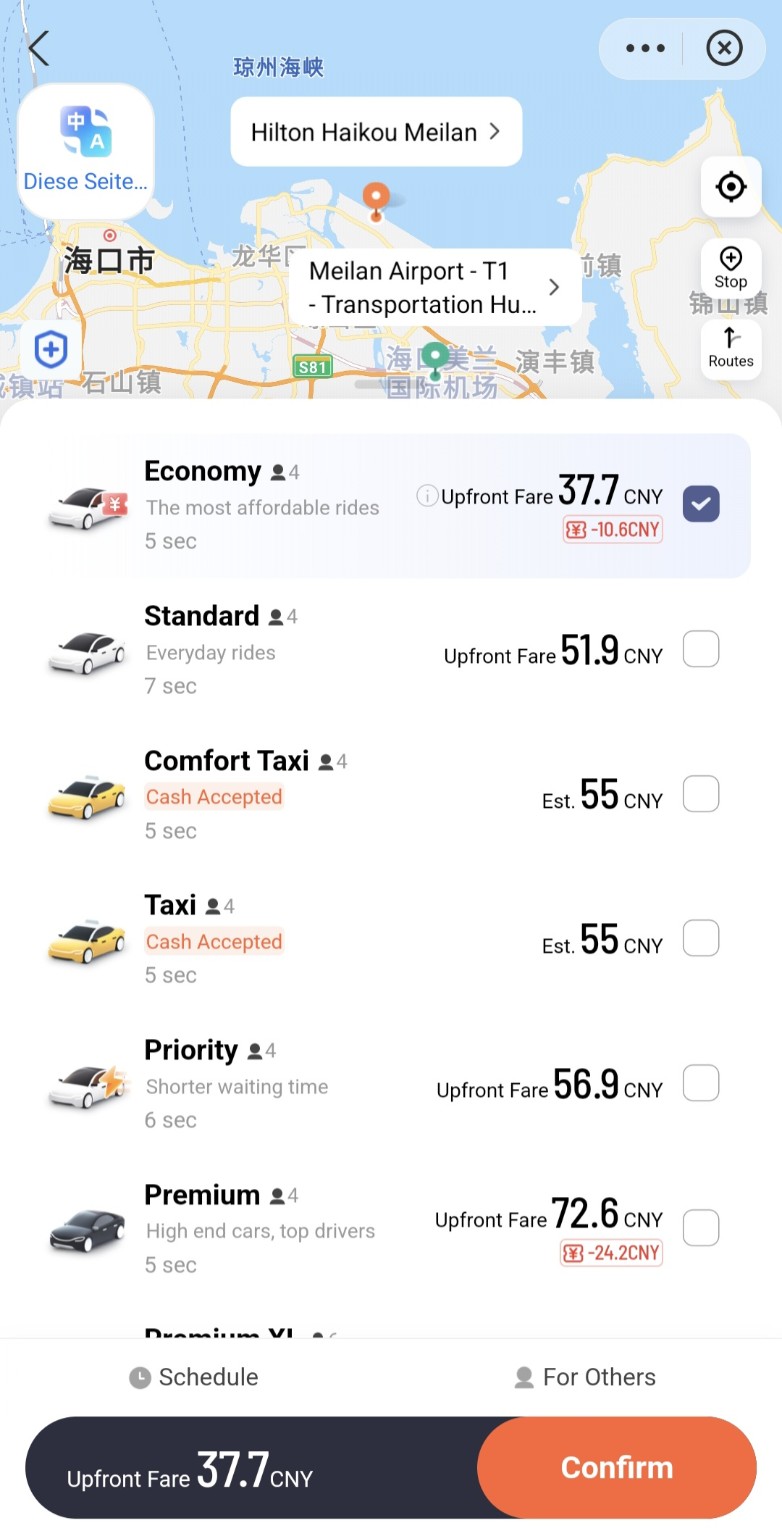
The four screenshots below show very clearly why Didi is so practical in China. You can see the pickup point and destination directly on the map, check the route, travel time and distance, see the fare before confirming and choose between several ride categories. That combination of visibility and convenience is what makes taxis in China feel so easy to use.
What the screenshots show particularly well
First you choose the pickup point and destination. Didi can even recognise German input such as Peking Hauptbahnhof, but I would still always check the suggested pin on the map.
Before you confirm the ride, Didi shows the route, estimated travel time, distance and fare. Depending on traffic, that amount can sometimes change a little during the ride, for example in a traffic jam. In my experience, these are usually small adjustments rather than unpleasant surprises.
Then you choose the ride category. There are simple rides, regular taxis, more comfortable cars, Priority and Premium. Some categories also allow cash payment if that is the option you deliberately want to use.
How a ride works in practice
After ordering, you immediately see where the car is and how long it will take to arrive. The fare has already been shown before confirmation. If traffic or the route changes, that amount can occasionally change a little during the ride. In my experience, those are usually only small adjustments rather than unpleasant surprises.
Once the driver arrives, the app shows a four digit ride code. This code belongs to your ride. It helps you identify the correct car and avoid getting into someone else’s taxi by mistake. That has happened to me before. It is not a disaster, but it is awkward enough that I now always check the number plate, the vehicle and the ride code before getting in.
Payment is usually automatic through the card linked to Alipay or Didi. For that, you first set up a personal payment code, essentially a short PIN used to confirm payments. After the ride, I usually confirm the payment only after I have stepped out of the car. At the beginning I stayed inside and waited for everything to go through. Later I realised there is no real need for that. I simply get out and confirm the payment calmly afterwards. Drivers are normally fine with that. I explain the payment setup in more detail on my page about paying in China.
Booking a taxi in advance
Advance booking is especially useful when you need to leave early for an airport, a train station or a day trip. I often book those rides the evening before. Once a driver accepts the booking, the car comes automatically at the scheduled time.
For more remote destinations, it is also worth thinking about the return ride early. I have never been left stranded in China, but it can take a while until a driver is available. If you want to be safe, book the return in advance or allow some extra time.
Vehicle types in Didi
Didi offers different vehicle types. There are standard rides, more comfortable cars and larger vehicles with more seats. For groups or luggage, one of the larger options can be very convenient.
My tip: if the price still feels reasonable, try one of the larger or more comfortable vehicles at least once. Some of the larger electric vehicles feel almost like a small business taxi and are very comfortable on longer rides.
Didi works especially well for hotels when you copy the Chinese hotel name. For train stations, also make sure you are heading to the correct entrance.
For parks, temples and Great Wall sections, I always check the pin. The right name is not enough if the entrance is placed incorrectly on the map.
For early flights, advance booking is worth it. That way the taxi ride does not become a stress point in the morning.
My conclusion
Taking taxis in China with Didi is much easier than many first time visitors expect. The main challenge is not the ride itself, but entering the pickup point and destination correctly. If you copy Chinese names, check the map pin and briefly confirm the ride code, number plate and vehicle before getting in, taxis become one of the most relaxed ways to get around China.